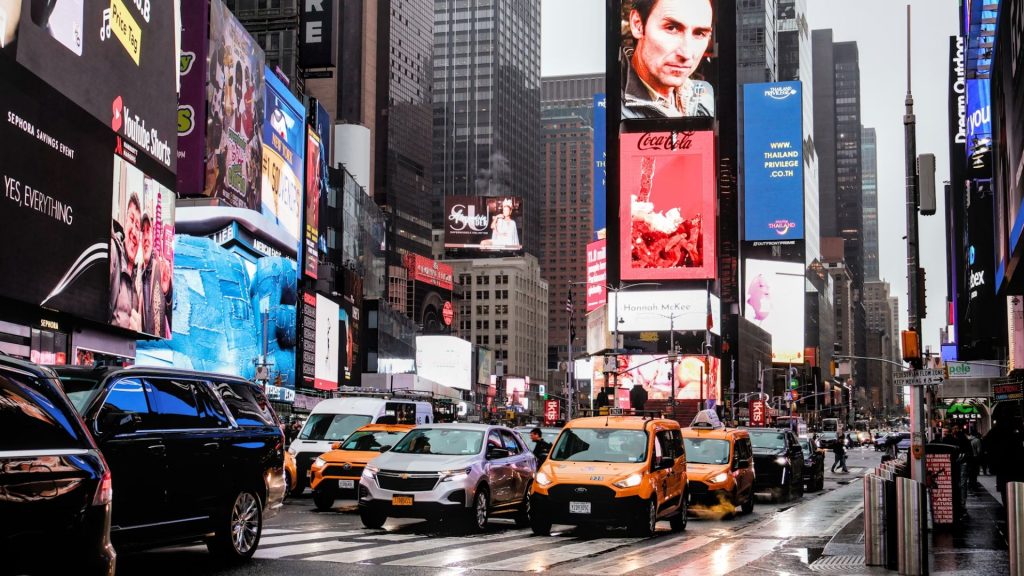
It’s been almost a year since New York City implemented new congestion pricing covering most of Manhattan south of 61st street, and the positive environmental impact is already clear.
During the first six months of 2025, an 11% reduction in traffic volume inside the congestion relief zone contributed to a 22% reduction in particulate pollution, according to a newly published Cornell University study.
Improvements in air quality were not just limited to the congestion relief zone: Pollution dropped across the wider New York metropolitan region during the same period.
“It’s really exciting to me that air quality improved throughout the entire metro area,” said Timothy Fraser, who co-authored the Cornell study. “This tells us that congestion pricing didn’t simply relocate air pollution to the suburbs by rerouting traffic.
“Instead, folks are likely choosing cleaner transportation options altogether, like riding public transportation or scheduling deliveries at night. This thins traffic and limits how smog compounds when many cars are on the road.”
The results also show that the reduction in New York’s pollution levels was greater than in other cities which have implemented similar schemes, including London and Stockholm.
“When I thought about that, it actually makes sense. Just look at how many people live in New York City compared to London and Stockholm,” said the study’s other lead author, H. Oliver Gao.
“As a result, you can see the impact of such a policy, the scope and scale, can be larger than what we observed in London and Stockholm.”
Tolls to reduce congestion and improve air quality in New York have been regularly proposed in one form or another as far back as the mid 2000s.
The system in place today received federal approval in 2023 and, several lawsuits later, was eventually given the green light by the city’s Metropolitan Transportation Authority in late 2024.