Plastics are phenomenally useful in a wide range of applications central to modern life. They are durable, malleable, corrosion resistant, and can be made cheaply from abundant raw materials.
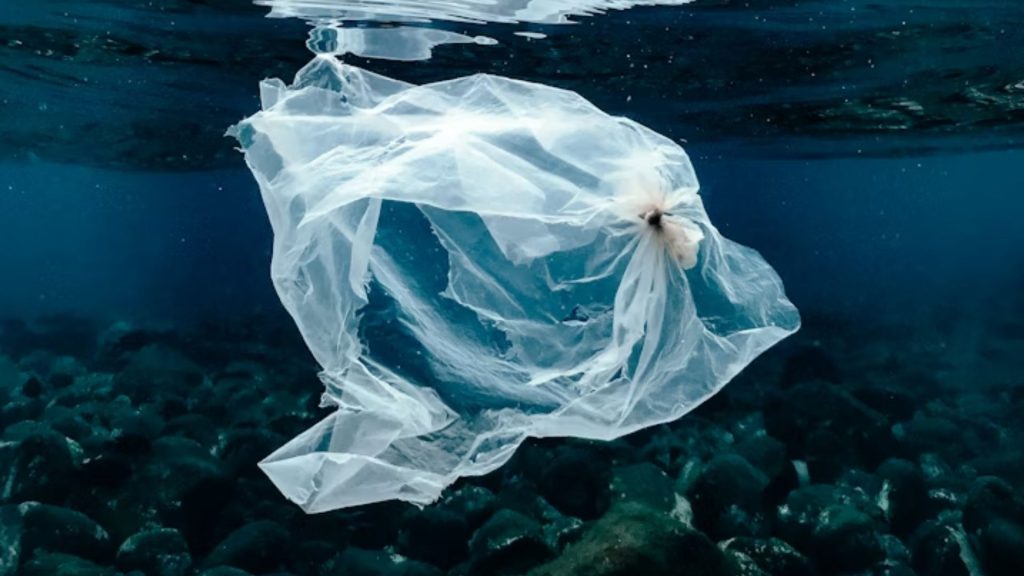
But it is these same properties that also make plastics so damaging to the environment. They take hundreds of years to degrade, leach toxic chemicals into fragile ecosystems and their production processes are a huge source of greenhouse gas emissions.
Is there another way? A team of scientists in Japan think there might be: A ‘plant-based plastic’ that dissolves in seawater after a few hours rather than a few centuries.
The research team used ionic polymerization – a way to create long chains of molecules using charged particles called ions – to combine a modified type of cellulose with a second material.
These materials’ opposing electrical charges cause them to latch together in a dense network of powerful bonds that provides the resulting product with plastic-like strength – until it comes into contact with seawater.
Sodium and chloride ions in the seawater weaken the material’s bonds and cause it to break down. This degradation happens so rapidly that a thin coating must be applied to inhibit it and ensure the material remains useful for a reasonable period of time.
The team, working at the RIKEN Center for Emergent Matter Science (CEMS) in Saitama, Japan, also experimented with adding different amounts of choline chloride (a water soluble salt) to modify the material’s flexibility allowing for the creation of thin stretchable films, hard sheets, and anything in between.
While showing off new creations in a lab setting is impressive, the researchers also demonstrated the material’s real-life utility by creating a shopping bag that successfully held everyday groceries.
The novel material offers multiple clear benefits over traditional plastic. For example, the polymerization process takes place in plain water at room temperature, making it potentially very cost effective to scale.
When it degrades, the material also splits neatly into its constituent molecular components. Not only does this mean no microplastics (tiny polluting fragments of traditional plastics) are created, it also means these components can be easily collected and reused to make new ‘plant plastics’.
The convenience of plastic is “hard to beat”, said Takuzo Aida, the team’s lead researcher. “With this new material, we have created a new family of plastics that are strong, stable, recyclable, can serve multiple functions, and importantly, do not generate microplastics.”
Other chemical engineering experts are cautiously optimistic about the new material’s potential, including Professor Joaquín Martínez Urreaga at Universidad Politécnica de Madrid, who described it as a “promising alternative to tackle marine pollution”.
The CEMS team’s study was recently published in the Journal of the American Chemical Society.