
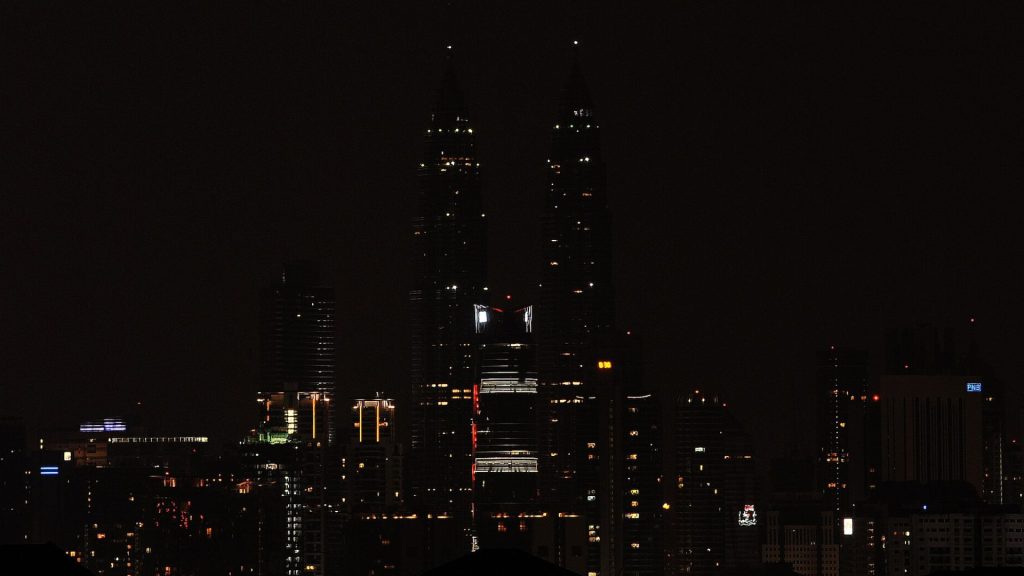
What is Earth Hour?
Earth Hour is an annual international event coordinated by the World Wildlife Fund (WWF) to draw attention to environmental issues.
Earth Hour was first marked internationally in 2008 and cities in nearly every country in the world now observe the event by switching off inessential lighting on major buildings and landmarks for one hour.
When is Earth Hour?
Earth hour is typically marked on the evening of the last Saturday of March. In 2026, Earth Hour is on 28 March.
History of Earth Hour
In 2004, WWF Australia teamed up with a Sydney advertising agency to identify ways to raise awareness of climate change and other environmental issues.
The idea to switch off lighting across Sydney was conceived a couple of years later and the city’s officials approved the event, which took place in Australia’s biggest city for the first time on March 31, 2007.
San Francisco held its own version of Sydney’s ‘Big Flick’ later that year, and the first coordinated international event took place in March 2008 with more than 400 cities across 35 countries participating.
By the tenth anniversary of the first event, nearly every country in the world was wither observing or participating in Earth Hour events.
2023 marked a shift in focus for Earth Hour as organizers challenged participants to increase engagement in community action and decrease reliance on the iconic ‘switch off’. To help with this effort, the event was rebranded as ‘The Biggest Hour for Earth’.
What to do on Earth Hour
Earth Hour is best known for the major landmarks and businesses that turn all unnecessary lights off for one hour to symbolize commitment to the planet.
In the last few years, organizers have encouraged participants to elevate the impact of this symbolic gesture by ‘giving an hour for earth’.
There’s no right or wrong way to give an hour for earth – the aim is to ensure that everyone who wants to make a difference is able to.
Organize a cleanup of your local beach, get creative with leftovers to make a tasty meal, paint a tranquil natural vista, or take a walk in the park: Everything counts as long as you try to spend the hour making a meaningful, positive impact.
You can share your activities with the world by using the hashtag #MyHourForEarth.
Earth Hour facts
- 2.2 million people in Sydney switched off their lights to mark ‘The Big Flick’ – the precursor to Earth Hour – in 2007.
- In 2009, Earth Hour was recognized as the world’s largest grassroots environmental movement.
- In 2020, Earth Hour was celebrated digitally due to restrictions caused by the COVID pandemic.
- Spiderman became an Earth Hour ambassador in 2014
- ‘Solar Trees’ are set up during Earth Hour in Shanghai to allow people to charge their mobile phones and other devices with renewable energy.
- Earth Hour events and activities in 2021 generated over 10 billion impressions on social media and more than 26,000 media headlines.
- Earth Hour 2025 saw an estimated 3 million hours ‘given for earth’.
Sources
World Wildlife Fund, Earth Hour.
More environmental days in March
- World Seagrass Day
- World Wildlife Day
- Food Waste Action Week
- Solar Appreciation Day
- International Day of Action for Rivers
- Global Recycling Day
- World Rewilding Day
- World Day for Glaciers
- Digital Cleanup Day
- International Day of Forests
- World Water Day
- World Meteorological Day
- International Day of Zero Waste