
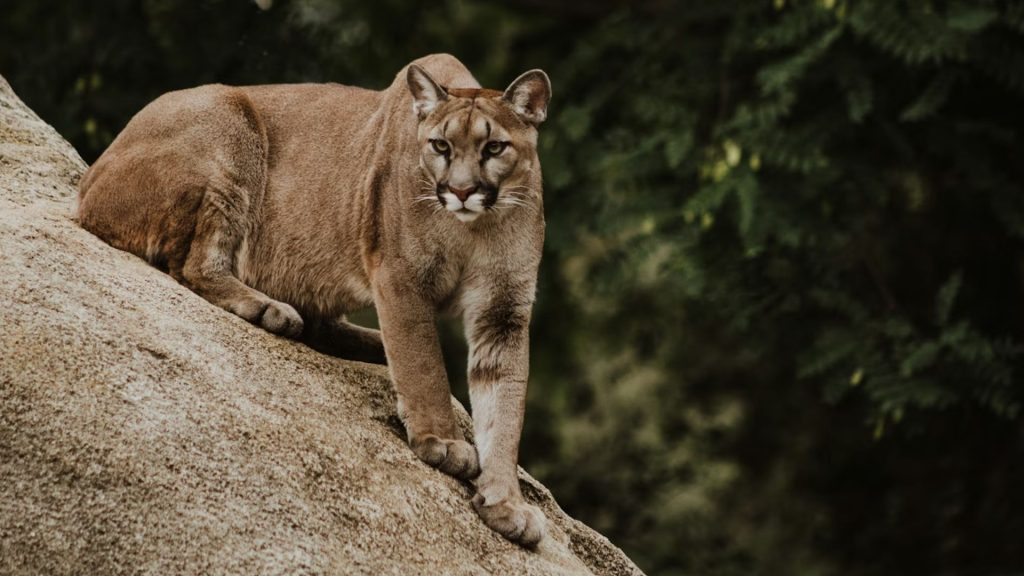
Mountain lions are the world’s most widely distributed land animal, with a range stretching from Patagonia in the South to Alaska and the Yukon in the north.
They could once be found across the entire breadth of the United States but have now been extirpated from the eastern half of the country as a result of hunting and habitat loss.
California’s mountain lions will face the same fate without urgent intervention, according to activists, advocates, and researchers.
That support may now soon arrive after the California Department of Fish and Wildlife (CDFW) recommended that mountain lions across the Central Coast and Southern California be listed as Threatened under the California Endangered Species Act (CESA).
If the Fish and Game Commission approves CDFW’s recommendations, California’s mountain lions will benefit from enhanced measures to safeguard habitats, mandate the modification of infrastructure to accommodate migration patterns, and restrict the use of anticoagulant rodenticides in the state.
Mountain lions are considered an ‘umbrella species’ for conservation, which means that numerous other plant and animal species in the same ecosystem indirectly benefit from a stable mountain lion population.
“This recommendation confirms that California’s mountain lions are in crisis and need our protection now,” said Ellen C. O’Connell, Executive Director of the Mountain Lion Foundation.
“From the Santa Monica Mountains to the Central Coast, these populations are being strangled by freeways and development. Today’s decision recognizes that we can’t wait any longer to act.”
Around 250 plant and animal species are currently listed under CESA, including Sierra Nevada bighorn sheep and California condors.
Concerns have been raised regarding the potential watering down of the federal Endangered Species Act. In response, California Governor Gavin Newsom recently signed a new bill into state law that requires the CDFW to grant provisional CESA-level support to any species impacted by reduced federal protections.