
Los Angeles has now fully divested from coal after the city’s final coal-powered energy source ceased operations at the end of November.
The United States’ second-largest city, home to almost 3.9 million people, still receives electricity produced using natural gas at the Intermountain Power Project (IPP) in Utah but the station’s coal-fired facilities were shuttered just before Thanksgiving.
More than 60% of LA’s energy now comes from renewable sources, according to Los Angeles Department of Water (DWP) chief executive Janisse Quiñones.
“This transition has been years in the making,” said Quiñones.“It reflects the hard work of our employees, the support of our customers, and the leadership of our elected officials.
“Together, we are building a cleaner, more resilient energy future for Los Angeles.”
LA Mayor Karen Bass described the development as “a defining moment for the City of Los Angeles.”
“LA’s coal divestment is not just about discontinuing the use of coal to power our city — it’s about building a clean energy economy that benefits every Angeleno.”
The IPP provided 11% of LA’s energy in 2024 and coal still accounts for more than 10% of the USA’s overall energy production according to the International Energy Agency (though output has more than halved since 2000).
The DWP has invested in various renewable energy initiatives in its bid to achieve 100% carbon-free energy in LA by 2035.
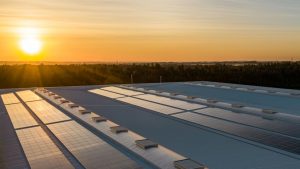
It recently celebrated the completion of the Eland Solar-plus-Storage Center, which is one of the country’s largest solar-plus-battery power plants and can meet 7% of the city’s total energy consumption.