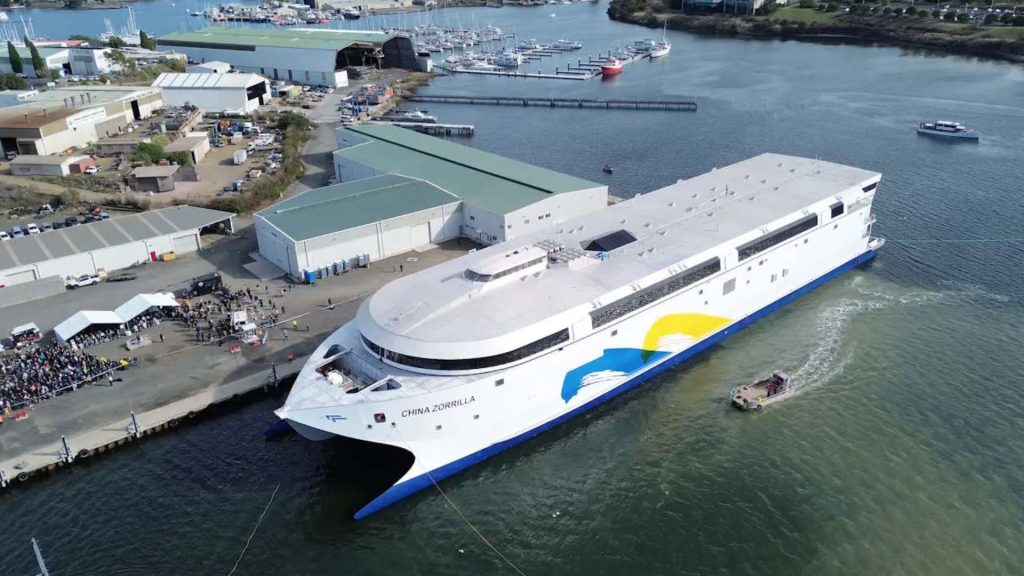
A 130-meter long ferry capable of carrying more than 2,000 passengers and up to 225 vehicles started up its engines for the first time this week.
Not so interesting, you might be thinking. After all, that’s a whole football field shorter than the biggest ferry in the world and not even close to the biggest passenger capacity.
However, what makes this vessel remarkable is that it runs fully on battery electric: It’s the largest electric ship – and the largest electric vehicle of any type – on the planet according to Incat, the Australian company that built it at shipyards in Tasmania.
The ship, currently known by the less than catchy name ‘Hull 096’, features the largest battery propulsion system ever installed on a ship comprising 250 tonnes of batteries delivering 40MWh of capacity.
To give you a better sense of the enormous size of this system, just 1MWh would be enough energy to drive an electric vehicle from New York to Vancouver or power the average American home for over a month.
“It’s a remarkable achievement by our workforce and a turning point for shipbuilding,” said Incat Chairman Robert Clifford, who was given the honor of powering up Hull 096 for the first time.
“Tasmania has been at the forefront of international aluminium shipbuilding for decades, and today’s milestone shows we are now leading the world in the next era – sustainable, high-performance vessels at scale.”
Hull 096 will be delivered to South American ferry operator Buquebus in the coming months, after which it will sail routes in the Rio de la Plata between Buenos Aires and Montevideo.
Chargers will be installed on both sides of the estuary that splits the two cities, and a full charge is expected to take just 40 minutes.
Incat’s staff presumably got a hard-earned break after hitting this milestone in sustainable shipping as they now will be full speed ahead delivering the next three battery electric ferries in the company’s order book to Danish operator Molslinjen.