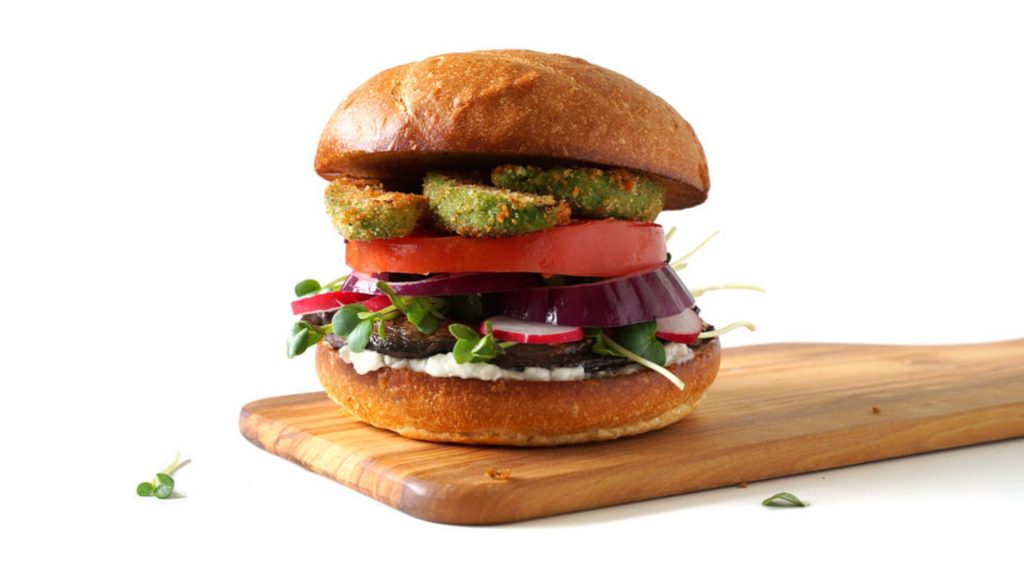
Soy and pea proteins commonly used in patties, sausages and other meat alternative products are typically much more sustainable than the originals they imitate.
Researchers have now discovered an even more environmentally friendly way to produce plant protein without sacrificing on taste or texture.
In fact, their creation beat traditional alternatives in taste and smell tests as per results published in the Journal of Agricultural and Food Chemistry.
The team from Justus Liebig University Giessen in Germany investigated the potential for fungal mycelia (the ‘root structure’ that mushrooms grow from) as a new food source, noting its shorter cultivation periods and reduced spatial requirements compared to mushrooms.
To kill two birds with one stone, they looked to ‘upcycle’ byproducts from existing food production processes to cultivate the protein-rich mycelia instead of introducing an entirely new process with its own waste products.
They identified liquid carrot side streams as a suitable substrate and measured the yield produced by 106 different fungal strains.
Pleurotus djamor – the fungus that produces pink oyster mushrooms – was found to be the most promising candidate, with a similar biological profile to existing animal and plant proteins.
To judge the market potential of this fungal mycelium, the team then conducted taste and smell tests using patties and sausages in which mycelia replaced soy and chickpea equivalents to varying degrees.
Participants preferred the mycelium patties to the soy patties, and they also thought sausages containing mycelium tasted and smelled better than chickpea-based ones.
The outcome demonstrates that it is possible to develop innovative, scalable protein alternatives while, at the same time, reducing the overall environmental footprint of food production.
“This study is a significant step towards a circular economy by transforming valuable food side streams into a high-quality protein source, highlighting the potential of fungal mycelium in addressing global food security and sustainability challenges,” said the study’s corresponding author, Martin Gand.
“Utilising side streams as substrate for mycelium production reduces environmental impact while adding value and supports food security by enabling an efficient and sustainable protein production.”