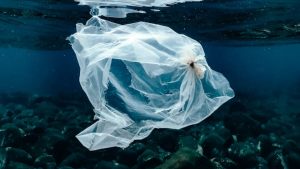

Researchers at the University of Bonn have developed a novel way to drastically reduce the amount of microplastics ending up in washing machine wastewater – inspired by fish.
Hundreds of grams of microplastics are produced every year by washing machines in the average four-person house. These fibres often end up in the environment as wastewater is typically mixed with sewage sludge regularly used as fertilizer on fields.
The research team looked to nature for ways to reduce this pollution and were drawn toward the remarkable adaptations of filter-feeding fish.
The shape of these fishes’ gill arch systems – the bony or cartilaginous structures which support the gills – allows for simultaneous filtering, feeding and cleaning:
“During food intake, the water flows through the permeable funnel wall, is filtered, and the particle-free water is then released back into the environment via the gills,” explains Alexander Blanke from the University of Bonn’s Institute for Organismic Biology.
“However, the plankton is too big for this; it is held back by the natural sieve structure. Thanks to the funnel shape, it then rolls towards the gullet, where it is collected until the fish swallows, which empties and cleans the system.”
The plankton rolling towards the gullet, rather than hitting the gills and getting stuck there, is the process that the team has attempted to replicate for their washing machine filter design, with plastics rolling towards a dedicated outlet rather than clogging the filter.
By testing various designs, angles and mesh structures using experimentation as well as computer modelling, the team landed on a design that was able to separate more than 99 percent of the microplastics out of the water without becoming blocked.
The team, whose findings were published in npj Emerging Contaminants, has already applied for an EU-wide patent for its design.